Even I get surprised by how often I dream about my Thinkpad x220. #dreamsaboutmyex 2018-01-12
Even I get surprised by how often I dream about my Thinkpad x220. #dreamsaboutmyex
tagged as
Even I get surprised by how often I dream about my Thinkpad x220. #dreamsaboutmyex
I was clearing out a box in the office, and a strip of passport-sized photos fell out, with one missing. Here is one of the remaining shots from this strip.

Apparently this is what I looked like, fifteen-plus years ago. I had no idea booth-photos were so indestructable. I think it's because the booth was pre-digital. I subsequently found a few other strips, in the same box which were taken a handful of years later, in a booth that used a digital process; they've blurred, bled, and run quite noticeably
I am a fairly sanguine UK rail commuter. I do not understand why they schedule the annual price hike for exactly the same week the holiday maintenance work is likely to have overrun, affecting all the services. Surely it would make more sense to raise the price at the start of the financial year, in April?
Old Street station has a popup "Black Mirror" shop. I am not sure how I feel about this. I am fairly sure I know how Dan Ashcroft would feel about this.
jwz hands-on user support : Another one gone. I'm only just starting to realise that all this time, I've been blessed to live in the time of the giants.
Behind the scenes pick of the day : AICN archive of cute on-set photographs taken from well-loved movies.
Day one of no twitter feels very strange. This gives me some confidence that it is probably a useful exercise.
Mr. David Hepworth , of the lovely Word Magazine (I subscribe !), a usually reliable, and always interesting cultural commentator just blogged a piece about the reactions to the untimely passing of ex-Apple CEO Steve Jobs . I think his assessment of Mr Jobs' cultural impact is wrong. I was going to present my reaction in place on his blog, although it did seem to grow a little too long for the commentary section, and I subsequently found out that his blogger site seems to be set up disallow comments from people who aren't logged in to a Google account, which I object to, somewhat dogmatically. So I decided to post my piece here, and link back to his , which is more in keeping with my own views about how the Web ought to run.
I don't disagree fundamentally with the tone of the piece. I do share his unease over the now seemingly mandatory broadcast grief marathons that accompany any death in the public eye, and I find an unpleasant hint of infantile narcissim in the fetish relationship between the user and product celebrated with the mass parades of public Apple evangelists and their iDevices, which might be a cousin to the sentiments he expresses about toys and proportional responses.
This attempt to sum up Mr. Jobs as a super-skilled marketer I think underestimates the scale, and perhaps also the nature of Mr. Jobs' contributions, some of which are subtle, many of which may look obvious, but usually only by hindsight. Even if his role was solely as a provoker, and curator of works; and I doubt it was, the truth is rarely that neat - he seems to have his fingerprints near the genesis of a string of transformational products, which do seem to fulfill the cliche of yes, changing the world.
Start at the beginning: His role in realising the portable microcomputer as a packaged appliance, something like a food processor, that people could be taught to directly integrate into their homes and offices. The Apple II barnstormed this market. I am not so sure as most other commentators that this idea was an obvious, archetypal product simply waiting to happen. Putting computers in your house, I think, is a fundamentally odd idea, albeit one that we have now fully naturalised. In 1976 it must have been almost schizophrenic.
Refining this idea into the Macintosh and Lisa, a specifically pioneering further insight was that a then unusual square pixel bitmapped display would better lend itself to curve plotting. This gave us the WYSIWYG relationship between the graphical computer and the laser printer , computer typography and thereby re-shaped the primary means of production for print and graphics.
The post-Apple "wilderness years" are particularly interesting. At NeXT they pioneered software controlled automated computer assembly and production, I've heard it said maybe a decade ahead of everyone else. I think they made a lot of mistakes, but I also think these lessons learned were invaluable later on. More significantly, the NeXT system software placed an elegant emphasis on "object-oriented programming", carefully enveloping the tedious nuts and bolts of interfacing with electrical computer hardware with well chosen software 'components'; tidy abstractions that lead to a system that was significantly easier to port to new hardware configurations, and simultaneously could be more-easily programmed at a higher level, without resorting to so much specialist understanding of specific hardware.
The significance of the work at NeXT will not be fully realised until later in his career, but as an intriguing footnote, it is on a NeXT workstation that a British scientist called Tim Berners-Lee develops some applications and protocols he calls the "World Wide Web". Mr Berners-Lee is on the record noting that the unique NeXT development tools allowed him to easily connect abstract layers to form useful application prototypes in the space of a couple of months.
Steve's other business during those years was Pixar . You don't have to study the history of cinema over the last two decades too hard to detect just how fundamentally Pixar shaped mainstream family movie making.
Then he returns to Apple and begins that now over-documented turnaround from prodigal son and failing company, to pin-up CEO and spectacular media and financial success. It's worth pointing out that the portablility of the NeXT system software allows them to insinuate it into Macintosh entirely. Next the iPod, and then we get iTunes, and the 'iTunes Store'. And then the same elegant software evolves to pocket phones, where the relative ease of programming buoys up the freshly invented 'App market'. And a finely edged production control builds an on-demand production, supply and retail operation that is the envy of the rest of the industry.
I'm not a professional writer as Mr. Hepworth is. I hope I don't read like I'm elegising him mawkishly like some Princess Di or Jade Goody for the "Facebook generation", or lionising him in super-human terms as though he's some over-egged digital Da Vinci, or Newton. I never met him. I'm not laying flowers anywhere. I'm sure that a huge part of his success was through fortunate timing, and developing good taste and keeping good company, but this is surely true of many whom history accounts amongst the Great, perhaps even of most. What a C.V. though!
These things are not a competition you can score, and yet I don't think most Word Magazine readers would rush to disagree with the suggestion that Steve's musical idols like Dylan or the Beatles "changed the world". I'm comfortable suggesting that to a subsequent generation, with it's own new media of choice, Steven P. Jobs influenced and changed the world to an arguably similar degree.
Airport-style metal detectors deployed at railway stations: Bath Spa Station is exactly the place I would expect a grass-roots totalitarian fascist regime to bloom.
I've been writing a couple of things in hy again this week. What's Hy? It's a cute idea. It's a lisp that compiles? (transpiles? I never get the difference) to the Python AST. I guess the elevator pitch might be something like clojure but for python. So yeah, a rich, super stable class-tree sort of OO language, with enormous portablility and twenty-odd years of library support for everything you might want to do, but with a nice, dynamic, lispy language and a repl.
I've played with hy a little bit on and off over the years. Actually, when I was working at SMR, I actually deployed some in production. (Somehow, I doubt that's still a thing). Python is my go-to scripting language, because it's very plain, very portable, batteries included, somewhat modern, probably already installed everywhere I work. I try to use it for scripty things, rather than shell or perl or something. Lisps are my favourite programming language. I just like how it fits together. I know lots of people don't, and I'm fine with that, but I always enjoy it.
So over the holiday weekend I found myself wanting a couple of almost throwaway scripts, and I decided to reach back into the hy bucket, and give that another try. I wrote a script to grab my selfie tweets from a twitter archive, and a rough script to publish formatted micro-blog entries directly from the shell.
It was a fun exercise. Hy has moved on a bit since I last tried. (They seem to have removed let, and car, and cdr, and lambda which I feel funny about), but by and large it works really well.
I don't think I would choose to use it to build any complicated systems. (Typically this is true of Python as well to be fair). I'd love to see something like an idomatic web framework in it. I could imagine using it to build serverless workers over something like apex up or chalice perhaps. I should totally try that!
I am not really very good at it yet, so I doubt I'm writing optimal programs. My scripts often look like Dr. Moreau designs halfway between a python script and something more lispy. This could well improve as I understand the underlying sequence / itertools glue a bit more, I'm often routing around confusing sequenced things. I absolutely enjoy writing little scripts like this in it, and I think I maybe enjoy it more than I would if I was writing plain python. I gave some thought about why this might be and I think I figured it out.
It could just be as simple as being all about the code editing. Python, and it's whitespace delimited blocks, is fine, and super readable, but it's always slightly fiddly to edit. Some of this is my toolchain, I'm sure. There's a lot of bells and whistles you can glue over emacs for Python work, and they're pretty good, but I do always find it a slightly fiddly experience. Balanced expressions and sexprs though are obviously an absolute joy to edit in emacs, alongside an embedded inferior lisp repl, and although it's nowhere near as integrated an experience as using slime with a "real" lisp, it's closer to that than editing Python ever feels, and for me that's a significant productivity win. So I think it will stay in the toolbox.
I recommend Hy to anyone who is interested in interesting lightweight languages, especially scripting languages. Obviously it's particularly relevant to anyone who likes python or lisps, even if just as a curiosity. If you work with Python and like using emacs though, and like the sound of 'Python but with structured editing' I would strongly recommend you look at how it might integrate into your workflow.
Since moving to Rochester a couple of weeks ago, I'm enjoying the commute into the city on the high speed train . Every morning we wait a minute or two at the perplexingly named Stratford International for a Eurostar to overtake us. Stratford is a weird conglomeration of pylons and glass astride a raw concrete gash. I like the way it looks.

Netscape Now! : I don't think anything says ' INTERNET ' to me louder than this iconography.
Surprisingly Sensible : Obviously, there's a book to flog, and he's making an attempt at a Jamie , but I found plenty to nod at in this Guardian piece.
I'm sick of Twitter, folks. I've decided to do something both mild and drastic about it. For 2018, I have resolved to stop using it.
I am not sure what it is for anymore, it certainly doesn't feel like it is for me. I think I've been disengaging slowly for the last couple of years, and in 2017 I repeatedly found it too aggravating, and depressing to engage with. I think I would have already ragequit, had one of last year's resolutions not been that silly selfie thing. Thus a seed was planted about resolutions and exits. Brains often work that way. (Referendums are silly though)
I was late to twitter. I downloaded my twitter archive, whilst I was scraping out all of the 2017 selfies, and apparently my first tweet is from Dec 2007.
gearing up to watch new BSG
— cms the vampire queen (@colinstrickland) December 18, 2007
I was late to Battlestar Galactica as well.
I probably spent a little while reading twitter before registering, although I don't remember anything specific. I can't remember why I signed up in the first place. Looking at that first month of odd, stilted entirely quotidian status posts, I can tell I'm working on Logical Bee, mostly alone, babysitting that dog. It's winter. Maybe I'm lonely? I have a dim memory of thinking it was pretty dumb for a long while before getting involved at all. I remember fiddling about connecting it to things, and experimenting with SMS tweets and emails. I don't think it really clicked for the longest while. I remember a sense of a clique I wasn't ever going to be able to get into. That first wave of web-natives, younger than my generation. More entuned to a web of application services and APIs than hypertexts and data servers. I remember tweetups being a thing, and a Bristol one being announced, and spending an hour or two before deciding firmly I wasn't the kind of person that went to that kind of thing. I quite wish I had gone now. I didn't used to be a very good joiner-in of things. I'm not much better at that now. A little bit, perhaps. Now I know to try.
It took the longest while, but eventually it clicked. I liked the lightness of it. It was sort-of social networking, but social networking at arms length. Lots of irony, lots of whimsy. I just remembered the earliest phase of my binning Facebook was to convert my facebook to just echo my tweets back into it, for the muggles to read. I remember being very snobby and standoffish about things like hashtags and @replies. My first reply wasn't until August 2008.
@davehodg , also for consideration; twot, and perhaps twerped
— cms the vampire queen (@colinstrickland) August 12, 2008
To Daveh! Either I don't know how to reply yet, or the Twitter archive has incorrectly threaded that reply back together. Either seems plausible.
I didn't use a hashtag until May 2009. Even then I was repurposing "get off my lawn" meta-commentary. Amused to see that my next half dozen hashtags are complaining about moonfruit's use of them for viral marketing. Many years later I ended up working there for a season. Again we see the seeds are sown, and the fruit is reaped.
Still fascinated by how rapidly people have started to game twitter trends, and thoroughly amused by #theBNParetwats
— cms the vampire queen (@colinstrickland) May 12, 2009
Not too ashamed of that one. It's interesting looking back at tweets like that, I have a sense that the prevailing vibe of Twitter at the time was that the cool kids were beating out the idiots. I don't get that vibe off Twitter now.
By this point it was clearly very firmly entrenched in my daily desktop routine. Once I got hold of smartphones that could run twitter, I think my usage ramped up. I remember by the time I got to last.fm, I was tweeting all the things, curating a couple of hashtags (#fantasypeelsessions for serendipitous word groups that sounded like band names, #fisharecool for cool fish facts), running multiple joke twitter accounts, writing bots, and generally really enjoying it. I remember when I got to Makeshift, and twitter seemed to be used as the wiring behind at least half of everything there, it then seemed like a necessary internet plumbing for web apps. With hindsight I think that was the peak. It was downhill from there. I don't like it any more, I have detected an opportune moment, and I have decided to leave. At least for one year.
I'm not going to use this post for arguing about why I think it's broken. One of the largest problems I have with it is the sheer concentration of negativity. And one of the reasons I want to move away from it is to focus on building things that are more positive. It's not just Twitter. I'm pretty broken-hearted with the state of the web in 2017 - it's very far from what I signed on to help build as one of those idealistic Gen X web 1.0 types. And again, rather than just bemoan that, I'd rather start focusing on ways to think about fixing that. And for me, in 2018, this means I'm going to go small, and focus on building things and content I can own, in the sidelines. I expect I will be updating here more. I plan to double-down a bit harder on indieweb things, and federated stuff. POSSE all the things. Death to silos. I've been experimenting with micro.blogs and mastodon.social, and I want to play more with beaker and dat, and blockstack and IPFS and other idealistic p2p proto-webs. Maybe even frogans?. The real web looks more like that. Maybe I can help figure out how to make it a bit easier for everyone to clamber onboard.
First off, that's flattering, almost-certainly-entirely-imaginary-cms-fan, thanks! I like you too! Occasionally some of my tweets get as many as five or six engagements, and I do enjoy keeping up with some lovely people. Some of whom I met or perhaps only know through twitter. I'm sorry if this feels like a breakup; It's not you, it's me, as they say in the rom-coms. (Actually, I'm not dumping anyone.)
Something else I want to push for in 2018 is better quality, stronger, social engagement. I want to cultivate more real contact, more high bandwidth engagement and connection with all the good people. This can work two ways of course. If you only really interact with me on a tweet by tweet basis, and you think you're going to miss that, then do please reach out. We can have coffee, or get beers, or just go fish in a lake or something else entirely. And I'm going to be pushing myself to reach out to more people in turn myself, something I'm astronomically poor at. Please help me with this if you can!
IRL networking I plan to ramp up a bit. More meetups, tech and maybe otherwise. Maybe I'll rescind my conference ban. Maybe I'll start some of these things, or start helping to organise them more.
I'm not doing an *infocide*. As well as publishing things hanging from here, which has plenty of RSS feeds, if you can still figure out how to integrate those into your workflows then I'll probably never be very far away. Also, if you look at the home page, there's a list of dozens of other not-Twitter platforms you can stalk me on or connect to me via (maybe we are already!) - If my plan comes together, I hope to be syndicating and updating the useful ones of these more actively.
I don't intend to delete or remove my twitter account, and I will set things up so I still get notifications, so nobody gets ignored. I might even automate some notifications to my twitter feed about updates to things elsewhere. I'm just not going to be participating as a human. I expect I will remove all the apps, so my turnaround on mentions might slow right down.
If you're in the select category of people who only know how to contact me with twitter, there are many options. I haven't changed my phone number, should you know me well enough to have one of those. If you're looking for a way to DM to me, I cannot endorse keybase strongly enough. I think they're trying to do something really interesting, and could do with some more network effect. Sign up to keybase, and keybase message me, I love getting keybase messages, and I always respond. Invite me to your keybase groups! Also, please share your slacks and your newsletters and your mailing lists with me, if you think I'd like them, or they'd like me.
Email still works, and I still read it. My address is even on my website.
Finally, if you're reading this, and we've Twitter interacted in some way, let me say a goodbye for now. If I was annoying, or argumentative, I'm sorry, I can be hard work soemtimes. Maybe some of that might have been caused by the platform? If I was fun or charming or interesting, then let's work to stay in touch! If you don't really care, you're not even sure how you got here from off of twitter, that's cool too, maybe I'll see you again in a year from now.
With all this focus on RSS generation for micro blog, I've been optimising my engine. I've learned how to use SBCL's profiler, and I have shaved a third off the cost of generating indexes

It's been a month now, and I ought to be used to it, and in many ways I am, but in surprisingly many ways I'm still not; I don't have a dog anymore. He got too old, and he got too sick, and tired, and uncomfortable, and he had to be put to sleep, back on the 28th of November. How does it feel? Terrible.
It was an enlarged heart that did for him. Poetically enough, his heart was just too large for him to carry on. The photo above is taken on the last morning, before I headed out to work. I knew there was very little chance he'd be coming back from the vet's appointment later that day. We had a little conversation and I carefully explained to him that he was a very good dog.
Of course he was actually a terrible dog. A brilliantly terrible one, as most dalmatians are born to be. He'd not really been himself for a couple of years, stumbling about and complaining about most things, but right up until the last couple of weeks he was coping mostly, and remained good company. In his prime though, that dog was an athlete, who used to literally fly, and if I open my mind's eye a little, that's what I can see, streaking around the Bristol countryside, barely controllable, raiding bins, and laughing at you, over his shoulder.
I don't really know what to write. I have to write something though. This website, which has been knocking around for fifteen years or more, only really took initial form as a rudimentary 'blog' so I could share dog photos with his burgeoning fanbase. Most of that has bitrotted now, but when I feel better I would like to clean it up some. So I can't really even let go of him without marking some notice here. I don't need to trot out all of the anecdotes, they're probably dull and too personal. After all, outside of my immediate circles, he's just some bloke on the internet's dog. To me, and to some of his internet fans though, he's the best dog in the world. Every single word of that is true.
Some time in 1997 I decided to get a modem for my home computer and try and get back on the internet. I hadn't really been online for a couple of years by this point. I'd spent a good 60% of the time I was supposed to be at university exploring the net, at approximately the same time the world-wide-web was being invented. Subsequently, a few of the offices I'd done contract work in were high-tech enough to have an internet pipe, but the majority were not, and by 1997 I was a year or two into the embryonic stages of what I then imagined to be a high-flying enterprise IT career. There were are few dial-up terminals in the office, but they were proper walled-garden , pretend the web isn't happening, CompuServe accounts, and I mostly ignored them.
By the time 1997 came around, the internet was seriously encroaching upon the real world. URLs on product billboards, mainstream magazine articles, entirely dedicated consumer magazines, even. Java hype was everywhere in the trade media, and was getting a further boost up from the growing sense of discomfort about the disproportionate amount of influence Microsoft now wielded over the PC industry. I was pretty grumpy about Windows by this point. I'd cheerfully embraced it's third generation, as a standard way to build what were for the time fairly advanced interfaces for DOS, with a built-in graphical toolkit, and I was making my living building client/server applications for businesses, using a 4GL called ' Gupta SQLWindows ', and a smattering of C and Visual Basic. The IDEs and the Win16 API were probably rudimentary, but I didn't know much better, and it was the closest thing to NEXTSTEP I'd found in a professional context. Then came Windows95, which promoted itself from a graphical shell for DOS, to a full-blown OS, which I found tremendously exciting until I'd worked with it for six months. All my tools and APIs were now yesterday's thing, and this new shiny Windows came with ridiculously inflated hardware requirements, and was frustratingly unstable. The joke term " Blue Screen Of Death " started to grate with familiarity. I grew insufferably contemptuous of Microsoft and everything it stood for.
At home I'd been running a linux system for a year or two. Linux had grown up fast since I'd first encountered it as a barely installable joke UNIX passed around the office one day on a handful of floppies. I'd spent a day installing it on a COMPAQ laptop then, and quickly judged it to be no competition for SCO . It improved and spread rapidly, and within a couple of years I was sufficiently inspired by reports to acquire a cheap PC clone and install, break, reinstall a succession of linux distributions, starting initially with a Slackware 2.something from a magazine coverdisc ( Computer Shopper , I suspect). Now I had a religion; I'd periodically switch distributions, usually from a CD/Book bundle in the bargain bucket of the local waterstones, sometimes from a CD set ordered by mail. No net connection at home at all. Well, hardly anyone did, and there weren't yet any flat-rate or free dial-up systems.
By 1997 though, I felt I was ready. I bought a discounted 33.6 external modem, subscribed to an ISP that sounded platform neutral, and didn't rely on bundling DOS or Windows software dialers (Direct Connection, as was), and spent a surprisingly effortless afternoon figuring out how to connect my little linux system to the internet. This seems like it ought to have been a frustrating process, given that this was RedHat 2.x or whatever I was running by this point, and I had no internet to search for help, and no local experts to ask, but I seem to remember it being fairly trivial to set up and script a PPP connection. I think the first thing I downloaded was Netscape Navigator. Or maybe Doom. I remember setting up an offline USENET server, and then feeling my way around the web, hungry for more linux information. I would download any interesting software source code bundle I could find, and try and build it. I periodically toasted my linux box this way, inexpertly installing new homebuilt versions of libc or XFree86 with little attention to package management or change control, and not much more appreciation for the software build process. Outside of USENET the linux web community seemed disjointed. Little islands of conflicting information, often hanging off university home pages.
One day I found this amazing sort of crowd maintained combination of a news feed and a bulletin board, already populated with a peer group almost custom-fit for me. I think I can remember how I found it. I was using a little desk applet for the Afterstep window manager called asmodem that let me toggle my modem. I was very big on customising my desktop then. I looked up the author's home page , to see if there were any good links to other AS wharf applets. One of the links to there was to this other place. I remember I spent a couple of hours there, browsing around what passed for the archives. It wasn't just linux and X, there were other nerd-friendly topics. I don't remember much about the content. I remember being engrossed, and following stories and commentary back and forth, drinking in content. Unluckily I didn't make a bookmark, and a couple of days later I realised I couldn't remember what the site was called.
I think it took me as much as a couple of weeks to find it again. It had a stupidly hard to remember URL. http://slashdot.org/ . I re-visited it frequently. It had a clever page construction, where the updates floated to the top, like a reverse INBOX. It aggregated interesting content, seemingly focused around linux, and GNU and other cool Free software like this new nuclear-mega-awk scripting language called Perl , and other nerdly content about movies, and sci-fi, and super-computers, and spaceships and BeOS . Stories were posted, usually based around a couple of links with commentary, and the users could add their own discussion in a threaded hierarchy, unmoderated, uncensored and even fully anonymously. I quickly became a compulsive visitor. Soon it was the first site I'd load after dialling up to the net.
The anarchic commenting community sort of worked. You'd recognise the same usernames in discussions. Actually, I'd recognise sigs before names. Most of the discussion was lucid and informative. I'd usually get as much from links in the comments as I would from the submission or editorial. Even the trolls seemed funny and community-minded. It had a sense of culture, of community. First Post! Duplicate submissions on the front page, Hot grits down your pants, The naked and petrified guy, Mae Ling Mak , Natalie Portman, the caveman user I'm struggling to recall the name of (urk?), In Soviet Russia, a Beowulf cluster, and all the rest. Memes, I suppose, but we didn't really call them that much then. The 'slashdot effect'. I remember every time there was a stable linux kernel point release, which was pretty frequently, they'd post a story about it, and I'd dutifully download the source, spend a couple of hours compiling it, and then install it, ruining my precious uptime in the process. JonKatz and his floundering attempts to become one of the gang.
I remember frequent stories about all these futuristic new desktop interfaces that were in the pipeline. GNUstep was well on the way to bringing my idolised NEXTSTEP frameworks into my home, cost-free. Futuristic new graphics display technologies ( Berlin, Fresco ). The amazing (and almost functional) eye-candy of the Enlightenment WM with it's realtime miniwindow pagers and overlayed virtual desktops. Some new initiative called GNOME which was going to bring a CORBA -based networked component GUI desktop framework to run on top of traditional UNIX some day. Funny submissions, hoax submissions. Disappointingly frequent pseudo-science stories about perpetual motion machines and cold fusion, and the like. Crack dot Com were writing their new game "Golgotha" that would blend the large scale RTS wargame with the cutting edge first-person mouselooked shooting genre, and they were targeting linux as a first class platform at launch. It was all intoxicating stuff, and I spent hours immersed in it, genuinely feeling some part of a community.
I was never a frequent poster. Initially I lurked, and dabbled with anonymity. I was very cautious about revealing too much of my personal information online in those days. I remember feeling really regretful for ages that I'd held off registering once I realised that people were competing over low UIDs. Still, here I am - user 24640 - 5 digits, not too bad. "scrutty" was the character I used to use on Perilous Realms MUD in my polytechnic days. I can't see any easy way to find my earliest comment by this account, and I can't remember what it was. Probably something embarrassing.
I remained pretty obsessed with the site for years. My friend Tim was reminiscing on Twitter yesterday about my introducing him to it. I can remember coming home from holiday abroad, internet-free of course, and deliberately reading the previous seven days submissions to make sure I hadn't missed anything. I quit my boring career and got a job at a cool dot com startup , just as things were bubbling up. Everyone there seemed to read slashdot reloading dozens of times a day. Important technology stories broke there hours before the mainstream news sites got hold of any of it, we were always days ahead of the 'suits' with these information nuggets. Famous people had accounts and posted amongst us (John Carmack! ESR! Bruce Perens! Neil Stephenson! Wil Wheaton!) which seemed really bizarre in those days long before twitter or official facebook accounts. Comment moderation arrived, and I remember submitting comments and then reloading frequently to check my karma score, which used to be visible numerically. Karma whoring inevitably arrived, and brought meta-moderation along with it. I was the first in our office to be selected as a meta-mod, and I remember feeling proud or cool or a massive nerd, or some composite emotion made of all three. I loved that the site was billed as news for nerds , a term I felt far more comfortable with than the more US-specific 'geek', which still grates on my ears a little.
I remember their IPO conducted in some kind of interestingly nerdy dutch auction system. I remember watching the stories of subsequent corporate ownership and acquisition and nervously watching the site for signs of imported cultural spoilage. I remember the Slashdot PT Cruiser . Slashdot was just a daily part of life, reflexively checked and rechecked. I submitted a handful of stories, but I don't remember ever getting one accepted. I remember Jim chuckling one day across the desk from me, because whilst running HEAD requests against slashdot.org to test a proxy server or something, he spotted that slashdot was inserting Futurama quotes into it's HTTP responses, as X-Fry or X-Bender headers. I remember feeling I was drifiting a little out of touch with the herd when they posted their famous iPod launch story .
I particularly remember that infamous afternoon in September, TeeJay looking over his screen at me and saying something about the Net being broken, and the World Trade Centre. All the news sites were down, but Slashdot just about stayed up enough for me to read about what was happening in New York city, and dash to the office kitchen to remain clamped, open-mouthed to the BBC news feed.
When I was formulating the boards at IMDb, slashdot was a gigantic influence on my design. Most obviously in the nested table thread structure, and the view options, but in some other subtler ways, that lead me to eschew the fiddly point scoring and filtering, and implement constant post expiry to try and prevent the conversation ossifying around the earliest, most repeated subset of views. We inadvertently spawned the GNAA, who went back to slashdot, forming a particularly weird and unpleasant slashdot troll subculture. The first time I watched as IMDb was in a slashdot home page story (probably LotR or a Star Wars prequel) I remember my disappointment at the somewhat smaller than I'd imagined size of the slashdot effect, I don't think they even made it into our top 100 referrers report. I was already visiting the site less often, I had my own enormous forum to worry about, and I'd switched back to using a Mac (which had become consumed by the latest iteration of my beloved OPENSTEP). I was still probably reading it most days a week, but posting far less.
I never quit completely. These days I'm probably down to a couple of visits a month, perhaps less than that. It still feels like an important part of my life, and I think it also represents an under-appreciated contribution to internet culture. It was the first blog-formatted site I recall ever seeing, although nobody called it that for years. It was the first successful news aggregation site to find a mainstream audience, and it unquestionably forged the the user-sourced content and discussion model template used by subsequent sites like Digg, Reddit and HN. I think it was a peer group for a huge number of people much like myself, and an important bridging stage for internet community culture in between USENET and the all-encompassing web. It was "Web 2.0" and "Social" years before they arrived. It really promoted a sense of belonging. I have never met Rob Malda, but I remember feeling elated all day, when he used slashdot to successfully propose marriage to his girlfriend , and yesterday when the surprising news broke about his resignation from the job he invented at the site he founded, it gave me far more pause than the more famous, wealthier man who grabbed all the headlines by resigning the same day.
Slashdot will endure, and I expect I will still visit it, sporadically. I'm not going to pretend it's as important to me today as it was even five years ago. I only just realised yesterday, that Rob Malda is one of my heroes, and I never even said "Thank You". Well, I have done now.
When you have, as I have, a race condition in posting that exists somewhere between systemd, rsync, bash, perl, and that's before you even get to the CMS, it is probably time for some refactoring
The Body On Somerton Beach : Adelaide, Australia, 1948, and the tale of a mind-bogglingly mysterious unsolved death.
Over at Eddie Campbell's blog, there's a run of posts springing from the idea of the extended comic-book page spread, that particularly caught my eye. I always enjoy Eddie's writing, whether in it's justly celebrated comic strip form, or in his wry, thoughtful articles critiquing the medium. This series of articles seems to be loosely orbiting Dave Sim, which is what has provoked me into comment.
One of these days, I always tell myself, I'll write a piece about the peculiar thing that is Cerebus , and how it plumbs in to my life. Or if I wait long enough, perhaps Andrew Rilstone will do a better job of it. Until that day though, finding sensible Cerebus coverage is a rare enough thing, and it's nice to read some well-formed opinions by Mr. Campbell.
Writing about writing about films : Another one from "The Atlantic", featuring the peerless prose styling of Mr. Clive James.
Does anyone know if eating your own bodyweight in Stilton is a good way to clear up Xmas flu?
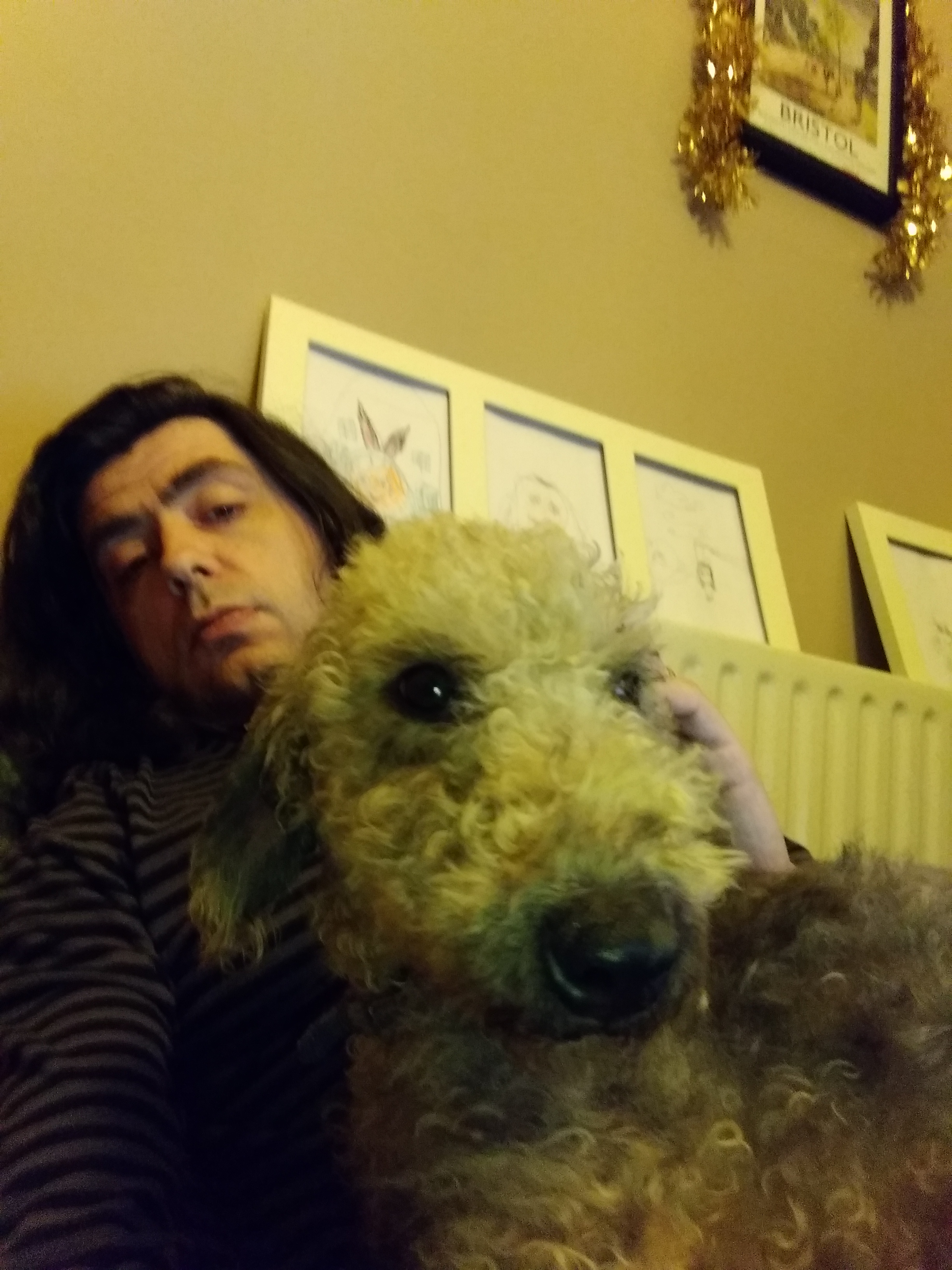 I think she is smitten.
  introducing Snoop Dogg, a three year old Bedlington rehome
 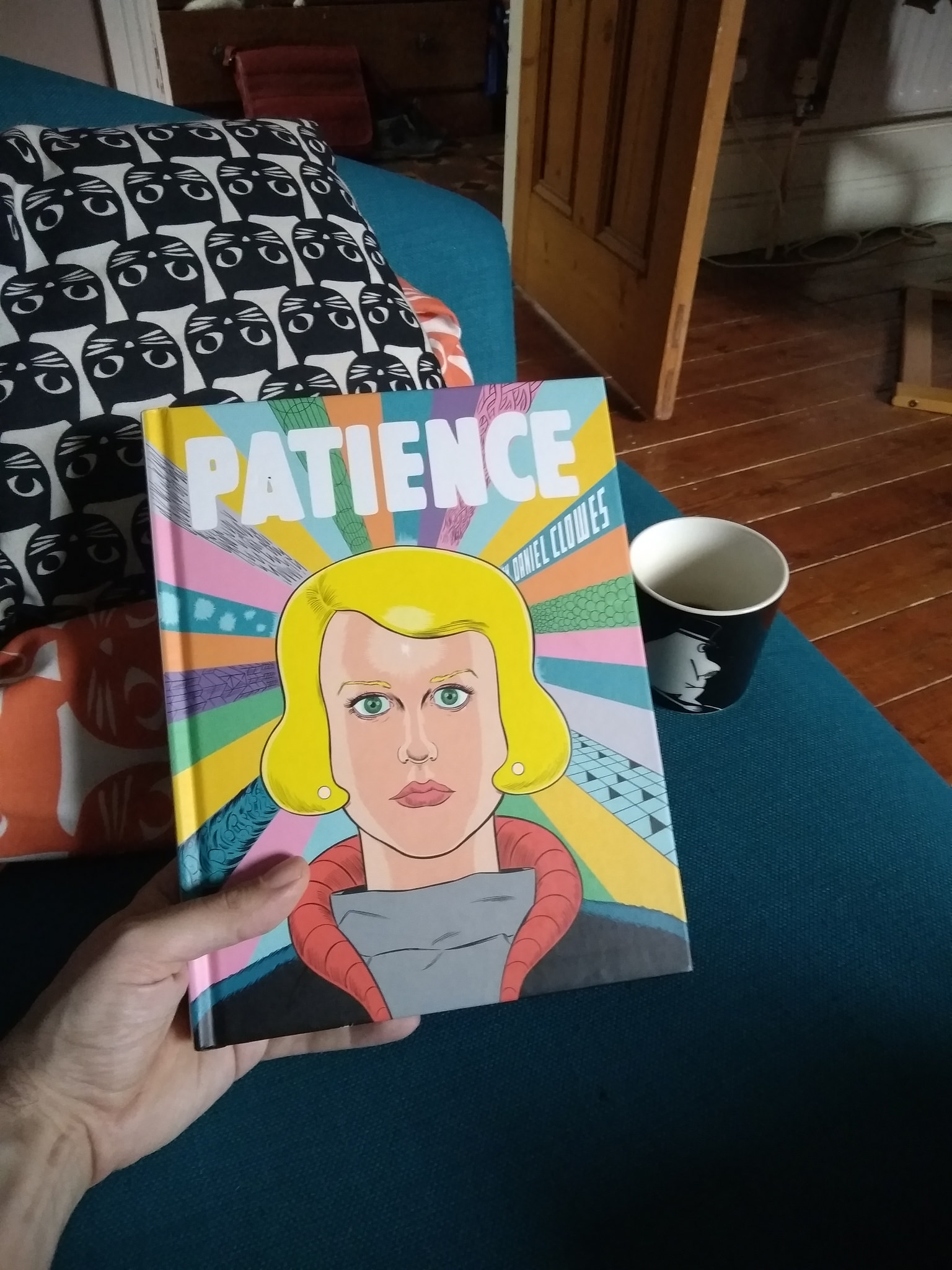 This was a great Xmas read, although nothing like what I was expecting