Mameo evolving 2008-09-18
The next iteration of maemo will include cellular connectivity. Hopefully without reducing the battery life.
tagged as
The next iteration of maemo will include cellular connectivity. Hopefully without reducing the battery life.
For the benefit of anyone else who missed the memo, Pulitzer Prize winning stripper, Berkely Breathed is back in the funny pages with a syndicated Sunday slot. Set back in Bloom County , with a mostly familar cast, with the mildest focus shift to centralising around the escapades of the titular waterfowl. It's readable online at Salon.com , although sadly there's not a feed, so you may need to schedule a reminder of your own.
Economic tailspin, leg-warmers, tired, bloated government set on self-destruct, jingo-tastic US presidential campaign underway, and Bill The Cat! The 80s are most definitely back.
The next iteration of maemo will include cellular connectivity. Hopefully without reducing the battery life.
Apple released iTunes version 8 this week , which introduced some excellent new features , such as Genius playlists, but broke the fancy perl script that I wrote to rotate my music library on my iPod touch.
While revisiting this, I took the opportunity to re-implement it, aiming to fix a few of it's faults, most specifically the terrible performance. I decided to use Python this time around, chiefly because of the existence of appscript , an apple event bridge with a nice syntax. Python's object and sequence semantics are a slightly better fit with AppleScript's data models, and appscript should be a more optimal solution than Mac::Glue for sending lots of messages iteratively.
I've also improved the actual command recipe, using 'duplicate' rather than 'add' to build the playlist seems more efficient. Also the overhead of having to periodically build glue modules with the ' gluemac ' tool is removed. Sadly appscript isn't shipped with OS X, but installing it ( at least on Leopard ), is as simple as ' sudo easy_install appscript '.
The concept behind the tool is the same : use a nominated playlist to synchronise the albums with the iPod, and pick a random set of albums from buckets organised by album rating. Currently it's set to shuffle in 10 '2 star' albums, 20 'three star' albums, and 30 'four star' albums, selected from a 'just music' smart playlist that filters the master library, removing all spoken word, and podcasts and other miscellany from the pool.
Here's the source . I'm far less experienced at python than I am perl, so I wouldn't claim it was a particularly idiomatic solution. It does run many times more quickly than the perl / Mac::Glue solution, taking a minute or so, rather than the best part of an hour. I would put all the performance gains down to the AppleEvents bridge , appscript interface, and using more efficient apple event set operations, rather than iterating over individual data.
Apple released iTunes version 8 this week , which introduced some excellent new features , such as Genius playlists, but broke the fancy perl script that I wrote to rotate my music library on my iPod touch.
While revisiting this, I took the opportunity to re-implement it, aiming to fix a few of it's faults, most specifically the terrible performance. I decided to use Python this time around, chiefly because of the existence of appscript , an apple event bridge with a nice syntax. Python's object and sequence semantics are a slightly better fit with AppleScript's data models, and appscript should be a more optimal solution than Mac::Glue for sending lots of messages iteratively.
I've also improved the actual command recipe, using 'duplicate' rather than 'add' to build the playlist seems more efficient. Also the overhead of having to periodically build glue modules with the ' gluemac ' tool is removed. Sadly appscript isn't shipped with OS X, but installing it ( at least on Leopard ), is as simple as ' sudo easy_install appscript '.
The concept behind the tool is the same : use a nominated playlist to synchronise the albums with the iPod, and pick a random set of albums from buckets organised by album rating. Currently it's set to shuffle in 10 '2 star' albums, 20 'three star' albums, and 30 'four star' albums, selected from a 'just music' smart playlist that filters the master library, removing all spoken word, and podcasts and other miscellany from the pool.
Here's the source . I'm far less experienced at python than I am perl, so I wouldn't claim it was a particularly idiomatic solution. It does run many times more quickly than the perl / Mac::Glue solution, taking a minute or so, rather than the best part of an hour. I would put all the performance gains down to the AppleEvents bridge , appscript interface, and using more efficient apple event set operations, rather than iterating over individual data.
As rumoured, it seems that Carl Newman is working on a second solo project . Fingers crossed, hoping there will be a UK tour to support it.
Some advice for when you're debugging code using the whizz-bang, illustrated debugger in XCode 3, and suddenly find that none of your breakpoints are triggered. XCode forgets all your breakpoints! Even plain breaks at line numbers disappear when you hit "Go". You may have some, or even all, of the following symptoms.
Google toolbox for Mac is a useful looking set of testing utilities, for Mac developers.
Some advice for when you're debugging code using the whizz-bang, illustrated debugger in XCode 3, and suddenly find that none of your breakpoints are triggered. XCode forgets all your breakpoints! Even plain breaks at line numbers disappear when you hit "Go". You may have some, or even all, of the following symptoms.
Google toolbox for Mac is a useful looking set of testing utilities, for Mac developers.
As hinted in my last post, we've recently spent a week away. Visiting with Judi and Jonathan in Normandy in their ongoing barn conversion, failing to construct a goat-shed, appreciating unusual motor vehicles, hanging in a yurt, eating great food, drinking French beer, enjoying good company, and marvelling in some simply astonishing weather.
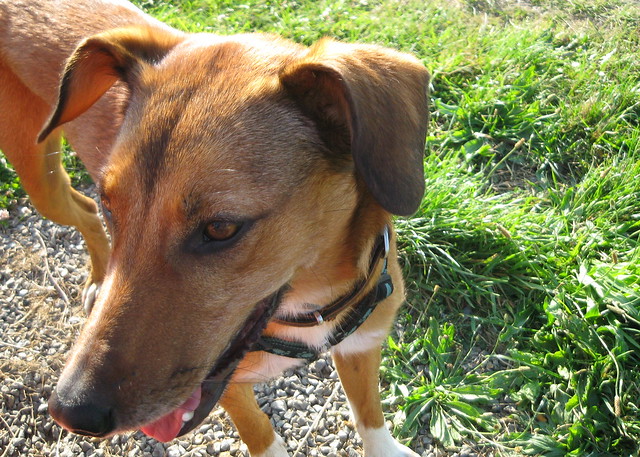
As hinted in my last post, we've recently spent a week away. Visiting with Judi and Jonathan in Normandy in their ongoing barn conversion, failing to construct a goat-shed, appreciating unusual motor vehicles, hanging in a yurt, eating great food, drinking French beer, enjoying good company, and marvelling in some simply astonishing weather.
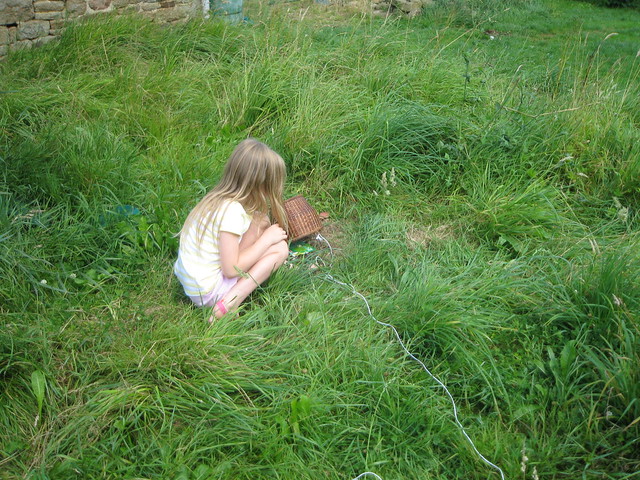
A few weeks ago, I had a day out in the country, by way of a stag 'do' for Mr. Mark Webster, whose nuptials are imminent. The main event was a piss-up in a brewery ; for a while the organisation looked sketchy enough to bring life to the hoary old cliché, but luckily enough everything came together right at the final hour, and all proceedings went swimmingly.
As a warm up to the main event, we spent the afternoon clay shooting courtesy of Avago entertainments. My nerves, already twisted by a long minibus drive, the rented bus an antique with a hundred and fifty thousand on the clock, the driver a first-timer, who kept commenting that he found the vehicle strange to drive as it had no brakes, I was feeling rather jumpy about spending the rest of the day discharging firearms. Luckily, just as we pulled up at the venue, I discovered my fears were all misplaced. We would, in fact, be laser shooting.
Effectively it is laser tag. The 'guns' are real deactivated shotguns, equipped with an infra-red sensor and transmitter. They communicate with the CPU in the scoreboard unit via a wireless network. The 'clays' are in fact miniature frisbees,covered with reflective stickers. You flick a switch to load your gun with two 'rounds', and if the gun receives a reflection back when you pull the trigger, it records a hit. The base unit plays sampled sound effects in sync to represent rounds fired and breaking clays, in the case of a hit. A small LED within the gun's sight flashes red or green to indicate a failure or success immediately after each shot.

It's a more effective system than I'd have predicted, and thus surprisingly good fun. The guns come across as accurate, and the full weight reinforces your suspension of disbelief. I found a real sense of development, in that I managed to improve measurably as the day wore on, and I accumulated practice, although I was suddenly, shockingly poor at the game where you had to pick up your gun from the floor, sight and fire while the clay was in flight. The event was well run, with a considered graduation of difficulty moving up from practice rounds, through to scoring, with enough changes in setting and rules to keep interest keen all the way through to the end of the session, where points were tallied, and the top scorers compete in a final shoot-off. I missed the cut, mostly due to the aforementioned speed round. Overall it's an absorbing afternoon's entertainment, and good value. I'd recommend it if you're looking for something to do with an appropriately sized group for around half a day or so.
A few weeks ago, I had a day out in the country, by way of a stag 'do' for Mr. Mark Webster, whose nuptials are imminent. The main event was a piss-up in a brewery ; for a while the organisation looked sketchy enough to bring life to the hoary old cliché, but luckily enough everything came together right at the final hour, and all proceedings went swimmingly.
As a warm up to the main event, we spent the afternoon clay shooting courtesy of Avago entertainments. My nerves, already twisted by a long minibus drive, the rented bus an antique with a hundred and fifty thousand on the clock, the driver a first-timer, who kept commenting that he found the vehicle strange to drive as it had no brakes, I was feeling rather jumpy about spending the rest of the day discharging firearms. Luckily, just as we pulled up at the venue, I discovered my fears were all misplaced. We would, in fact, be laser shooting.
Effectively it is laser tag. The 'guns' are real deactivated shotguns, equipped with an infra-red sensor and transmitter. They communicate with the CPU in the scoreboard unit via a wireless network. The 'clays' are in fact miniature frisbees,covered with reflective stickers. You flick a switch to load your gun with two 'rounds', and if the gun receives a reflection back when you pull the trigger, it records a hit. The base unit plays sampled sound effects in sync to represent rounds fired and breaking clays, in the case of a hit. A small LED within the gun's sight flashes red or green to indicate a failure or success immediately after each shot.
It's a more effective system than I'd have predicted, and thus surprisingly good fun. The guns come across as accurate, and the full weight reinforces your suspension of disbelief. I found a real sense of development, in that I managed to improve measurably as the day wore on, and I accumulated practice, although I was suddenly, shockingly poor at the game where you had to pick up your gun from the floor, sight and fire while the clay was in flight. The event was well run, with a considered graduation of difficulty moving up from practice rounds, through to scoring, with enough changes in setting and rules to keep interest keen all the way through to the end of the session, where points were tallied, and the top scorers compete in a final shoot-off. I missed the cut, mostly due to the aforementioned speed round. Overall it's an absorbing afternoon's entertainment, and good value. I'd recommend it if you're looking for something to do with an appropriately sized group for around half a day or so.
It seems like the iPhone 3G has been another smash hit. Certainly here in the UK, with pretty universal 3G signal coverage, there's lots of interest, and the handsets are selling out as quickly as they come into stock. Several people I know who waited out the first generation immediately signed up for the 3G edition.
Responses to the new platform seem mostly positive, although there's already some mild grumbling seeping through across the web. There's more software glitches, unsurprising; given the rush of new third-party applications there's countless potential software combinations interacting in unpredictable ways. The new units eschew the metal casing of the original iPhone, for a return to possibly scratch-prone iPod plastic. 3G mode depletes the battery rapidly, just as Apple said it would, when they justified their initial transport choice of GPRS/EDGE. The camera is unimproved over the first generation (although I have always been rather impressed with the iPhone camera. For a phone, with no flash it takes great photos, a textbook-worthy example of why it's nothing to do with the megapixel count)
So maybe it's not the holy grail of portable devices. It's certainly not for me. I don't like the idea of being locked to a single phone company. I don't want a smartphone that can't be used as a 3G modem - I've grown too used to being able to connect a variety of devices up to the net, using USB / bluetooth or even infra-red links. It's a little big for my idea of a phone.
As a portable, internet connected, media player cum tablet, it can't be beaten. The mobile browser is immeasurably better than any others I've used. The iPod, photo, and movie playing is slick, and the iPod + iTunes combination still the best available digital music library implementation. The straightforward syncing of contacts and calender information beggars belief (at least for Mac users, such as myself ). Thrown in a few simple PIM applications, ebooks and games from the Application store, and you're looking at a compelling platform.
Of course, you can get the majority of this behaviour in the iPod touch. Smaller and lighter than it's phone siblings. Metal back. iPhone-trouncing storage capacity (up to 32GB). Runs the same operating system and applications, same beautiful interface. No contract. The downside being that you can only use it as an internet device over WiFi, which means you need to be tethered to a hotspot. Except it doesn't mean this at all.
There's a simple recipe to open up the iPod touch's internet capabilities to something much closer to the iPhone.
It seems like the iPhone 3G has been another smash hit. Certainly here in the UK, with pretty universal 3G signal coverage, there's lots of interest, and the handsets are selling out as quickly as they come into stock. Several people I know who waited out the first generation immediately signed up for the 3G edition.
Responses to the new platform seem mostly positive, although there's already some mild grumbling seeping through across the web. There's more software glitches, unsurprising; given the rush of new third-party applications there's countless potential software combinations interacting in unpredictable ways. The new units eschew the metal casing of the original iPhone, for a return to possibly scratch-prone iPod plastic. 3G mode depletes the battery rapidly, just as Apple said it would, when they justified their initial transport choice of GPRS/EDGE. The camera is unimproved over the first generation (although I have always been rather impressed with the iPhone camera. For a phone, with no flash it takes great photos, a textbook-worthy example of why it's nothing to do with the megapixel count)
So maybe it's not the holy grail of portable devices. It's certainly not for me. I don't like the idea of being locked to a single phone company. I don't want a smartphone that can't be used as a 3G modem - I've grown too used to being able to connect a variety of devices up to the net, using USB / bluetooth or even infra-red links. It's a little big for my idea of a phone.
As a portable, internet connected, media player cum tablet, it can't be beaten. The mobile browser is immeasurably better than any others I've used. The iPod, photo, and movie playing is slick, and the iPod + iTunes combination still the best available digital music library implementation. The straightforward syncing of contacts and calender information beggars belief (at least for Mac users, such as myself ). Thrown in a few simple PIM applications, ebooks and games from the Application store, and you're looking at a compelling platform.
Of course, you can get the majority of this behaviour in the iPod touch. Smaller and lighter than it's phone siblings. Metal back. iPhone-trouncing storage capacity (up to 32GB). Runs the same operating system and applications, same beautiful interface. No contract. The downside being that you can only use it as an internet device over WiFi, which means you need to be tethered to a hotspot. Except it doesn't mean this at all.
There's a simple recipe to open up the iPod touch's internet capabilities to something much closer to the iPhone.
A gigantic Alan Moore interview, from a couple of years ago . Scanned in, from the looks of things, but covers some novel ground, devoting a lot of time to the mechanics and methods of comic book writing.
A gigantic Alan Moore interview, from a couple of years ago . Scanned in, from the looks of things, but covers some novel ground, devoting a lot of time to the mechanics and methods of comic book writing.
Cesare Bonizzi, a 62 year old Capucin monk from Milan, Italy fronts a genuine metal band . They have recently released their second album<a> . According to the BBC piece it's 'hard core' metal.
Cesare Bonizzi, a 62 year old Capucin monk from Milan, Italy fronts a genuine metal band . They have recently released their second album<a> . According to the BBC piece it's 'hard core' metal.
Every time I install a fresh debian derived linux, I subsequently find out that I'm missing the man pages for the C library. Usually many months later, it's not like I program in C for kicks. I then waste twenty minutes fruitlessly grepping around in apt using patterns like 'glibc'. The package name is actually 'manpages-dev' . Perhaps posting it here will fix this in my memory.
Every time I install a fresh debian derived linux, I subsequently find out that I'm missing the man pages for the C library. Usually many months later, it's not like I program in C for kicks. I then waste twenty minutes fruitlessly grepping around in apt using patterns like 'glibc'. The package name is actually 'manpages-dev' . Perhaps posting it here will fix this in my memory.
Articles in the Economist magazine are invariably concise and clear. Here is their style guide.
Articles in the Economist magazine are invariably concise and clear. Here is their style guide.
An excellent festival. More completely organised than I expected. This came to prominence straight away, when a rather spacey lady handling our tickets failed to give us one of the essential ID cards that pair up with the wristband to allow entry and re-entry. A security guard stopped us from heading back in to point out the error. Anticipating anguish at the gate, and hoping that a single card and a friendly attitude might get us through, we were met by a super-friendly chap, speaking perfect English, who whisked us back to the check-in, where we waited for the woman to confirm that her stack of cards and tickets were out by one, and furnished us with the missing card. And then we were in. Things do not run that smoothly at Glastonbury when your credentials go awry!
The venue is good, purpose built, although admittedly it does have a slight air of NCP car park to it. There are three amphitheatres with banked steps of seating set facing out to sea. These make up the RockDelux , ATP and the VICE stages. The other two stages, namely the CD Drome , and the Estrella Damm stage are set up on the main paved area that links the first three, with the food market between them. There are two gigantic arrays of solar cells, apparently the largest in Europe, which at least made a handy shelter during the couple of light rain showers, even if they sadly aren't used to directly power the festival itself . There is also an indoor concert hall, the Auditori, which I didn't manage to set foot inside once, a combination of not being nearby when anything compelling was happening there, plus not quite being able to figure out where the entrance actually was!

The festival runs over several days, Thursday to Saturday, and keeps to a gruelling schedule, starting at four or five p.m., and running through till four or five a.m the next morning. It's really all about the music, as there is little else to do onsite, other than browse a few T-shirt and record label stalls, eat functional outdoor food, or drink expensive sponsor beer from plastic cups.
It's far less wear upon the legs and feet than the typical British festival, the proximity of the stages, along with the near-universal seating, and paved footpaths rather than clogging mud fields thankfully mean that it's just the marathon running time contributing to your fatigue, not trudging miles around countryside inbetween sets. The climate was pleasantly appropriate, a few spots of light rain but it was mild enough to be comfortable in light clothing all the way through the evening, so you could just stick to the basic set of clothes you came in wearing, not wrestle with lugging around cumbersome outfit changes to cater to changes in the weather.
It may be just a result of the lack of crowding, but the toilet facilites were fine, little queuing, and freshly clean each day. I recommend taking a little dispenser of handwash gel, you can pick these up in the chemists nowadays.
Another benefit of the close site is the number of acts you can practically watch. As the stages are just separated by a minute or two's easy stroll you can mix and match to take in as much, or as little of a set as you fancy. It's quite possible to watch the start of one artist's set for a couple of songs, and then wander around another three stages watching a couple of numbers at each, and still return to the start to catch the final few of the original. This all makes it incredibly easy to sample new or interesting acts on spec without having to miss out on much if any of your must-see sets. Over the three days we easily managed to see dozens of acts, with comparatively little effort.
It would take too long to run through them all in detail, so I'll just group the highlights into some buckets.
An excellent festival. More completely organised than I expected. This came to prominence straight away, when a rather spacey lady handling our tickets failed to give us one of the essential ID cards that pair up with the wristband to allow entry and re-entry. A security guard stopped us from heading back in to point out the error. Anticipating anguish at the gate, and hoping that a single card and a friendly attitude might get us through, we were met by a super-friendly chap, speaking perfect English, who whisked us back to the check-in, where we waited for the woman to confirm that her stack of cards and tickets were out by one, and furnished us with the missing card. And then we were in. Things do not run that smoothly at Glastonbury when your credentials go awry!
The venue is good, purpose built, although admittedly it does have a slight air of NCP car park to it. There are three amphitheatres with banked steps of seating set facing out to sea. These make up the RockDelux , ATP and the VICE stages. The other two stages, namely the CD Drome , and the Estrella Damm stage are set up on the main paved area that links the first three, with the food market between them. There are two gigantic arrays of solar cells, apparently the largest in Europe, which at least made a handy shelter during the couple of light rain showers, even if they sadly aren't used to directly power the festival itself . There is also an indoor concert hall, the Auditori, which I didn't manage to set foot inside once, a combination of not being nearby when anything compelling was happening there, plus not quite being able to figure out where the entrance actually was!
The festival runs over several days, Thursday to Saturday, and keeps to a gruelling schedule, starting at four or five p.m., and running through till four or five a.m the next morning. It's really all about the music, as there is little else to do onsite, other than browse a few T-shirt and record label stalls, eat functional outdoor food, or drink expensive sponsor beer from plastic cups.
It's far less wear upon the legs and feet than the typical British festival, the proximity of the stages, along with the near-universal seating, and paved footpaths rather than clogging mud fields thankfully mean that it's just the marathon running time contributing to your fatigue, not trudging miles around countryside inbetween sets. The climate was pleasantly appropriate, a few spots of light rain but it was mild enough to be comfortable in light clothing all the way through the evening, so you could just stick to the basic set of clothes you came in wearing, not wrestle with lugging around cumbersome outfit changes to cater to changes in the weather.
It may be just a result of the lack of crowding, but the toilet facilites were fine, little queuing, and freshly clean each day. I recommend taking a little dispenser of handwash gel, you can pick these up in the chemists nowadays.
Another benefit of the close site is the number of acts you can practically watch. As the stages are just separated by a minute or two's easy stroll you can mix and match to take in as much, or as little of a set as you fancy. It's quite possible to watch the start of one artist's set for a couple of songs, and then wander around another three stages watching a couple of numbers at each, and still return to the start to catch the final few of the original. This all makes it incredibly easy to sample new or interesting acts on spec without having to miss out on much if any of your must-see sets. Over the three days we easily managed to see dozens of acts, with comparatively little effort.
It would take too long to run through them all in detail, so I'll just group the highlights into some buckets.
Sometimes you run programs in xterm windows that try and do you a favour, by setting the xterm title property. Potentially useful enough, but aggravatingly some of them don't restore the previous title when they exit. If you're using some scheme of your own to set meaningful window titles, this is annoying.
Here's a shell one liner that you can use to grab the current title in an xterm. You could use this to write a wrapper script that gracefully launches any such rude application, and restores the rightful title property when it's done
/usr/X11R6/bin/xprop -id $WINDOWID | perl -nle 'print $1 if /^WM_NAME.+= \"(.*)\"$/'
Sometimes you run programs in xterm windows that try and do you a favour, by setting the xterm title property. Potentially useful enough, but aggravatingly some of them don't restore the previous title when they exit. If you're using some scheme of your own to set meaningful window titles, this is annoying.
Here's a shell one liner that you can use to grab the current title in an xterm. You could use this to write a wrapper script that gracefully launches any such rude application, and restores the rightful title property when it's done
/usr/X11R6/bin/xprop -id $WINDOWID | perl -nle 'print $1 if /^WM_NAME.+= \"(.*)\"$/'
Sometimes you run programs in xterm windows that try and do you a favour, by setting the xterm title property. Potentially useful enough, but aggravatingly some of them don't restore the previous title when they exit. If you're using some scheme of your own to set meaningful window titles, this is annoying.
Here's a shell one liner that you can use to grab the current title in an xterm. You could use this to write a wrapper script that gracefully launches any such rude application, and restores the rightful title property when it's done
/usr/X11R6/bin/xprop -id $WINDOWID | perl -nle 'print $1 if /^WM_NAME.+= \"(.*)\"$/'